Is Using AI on Your Final Year Project Considered Cheating?
ProjectWriter
September 9, 2026
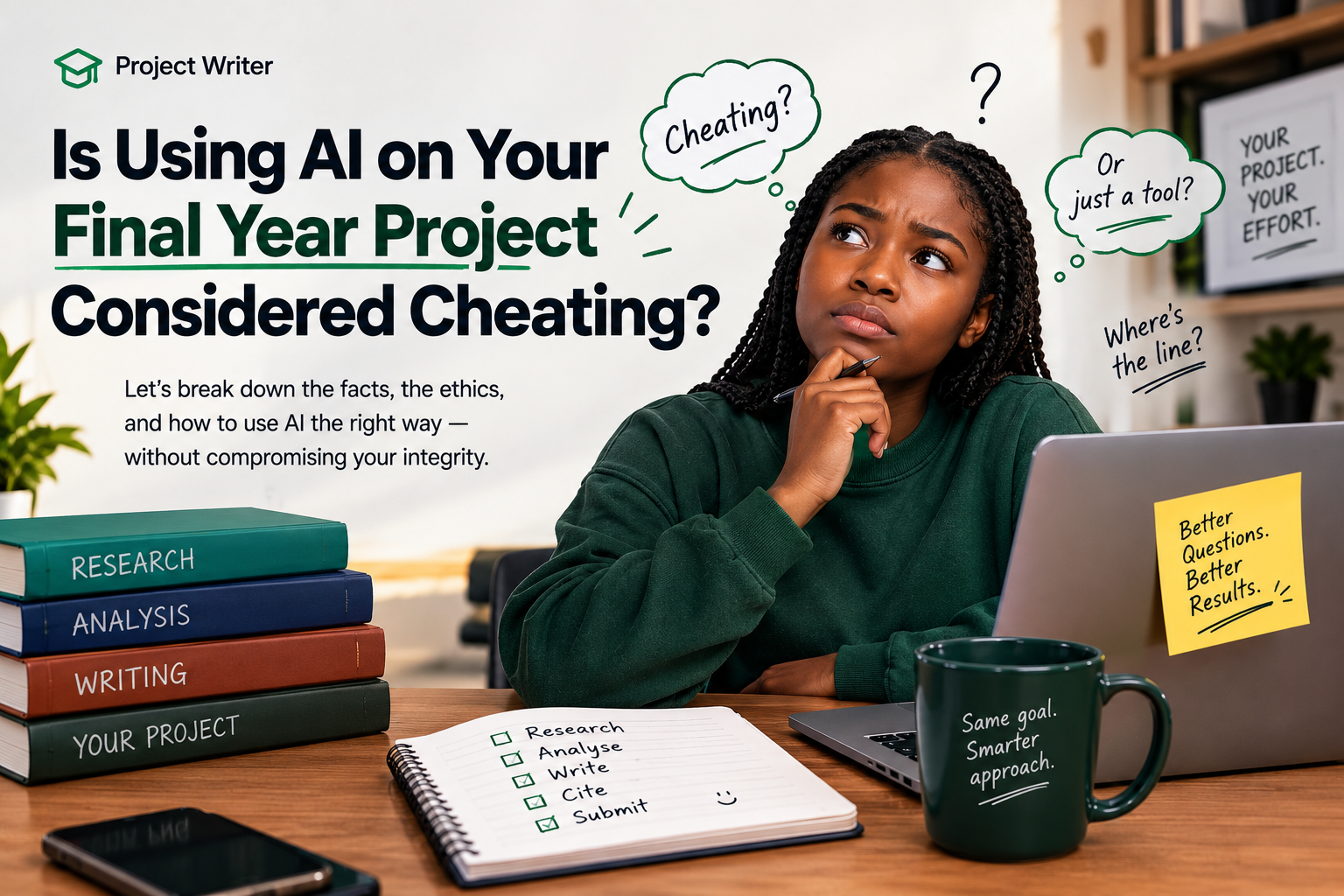
Short answer: No, not automatically. Using AI to help with your final year project isn't cheating on its own, but submitting AI-generated text as your own original work, without disclosing it or doing anything to it yourself, is academic misconduct under the AI policies Nigerian universities are now rolling out.
The line isn't always obvious, so here's what's actually allowed, what isn't, and how to stay on the right side of it without slowing yourself down.
The Short Answer
Allowed: using AI as a support tool, brainstorming, outlining, summarizing articles, improving grammar, generating practice questions, as long as you disclose its use and substantially add your own analysis, examples, and voice on top of it.
Prohibited: copy-pasting AI-generated chapters straight into your project, fabricating references, generating fake data, or hiding AI use from your supervisor. These count as serious violations and can lead to project failure or disciplinary action.
What Nigerian Universities Are Saying
Recent policy moves from Nigerian institutions make the distinction fairly clear:
The University of Abuja launched Nigeria's first AI-powered research ecosystem in mid-2026, explicitly built around originality and academic integrity, not ghostwriting.
NUC-aligned policy proposals from 2026 sort AI use into three tiers, covered in the table below.
Recent research found that most Nigerian students already use generative AI for legitimate support like summarizing and research help, but a significant share admit using it for assignments without acknowledging it, which is exactly the integrity risk these new policies target.
Tier | What it covers |
|---|---|
Tier 1, Always permitted | Grammar checks, rephrasing for clarity, having a concept explained to you |
Tier 2, Permitted with disclosure | Outlining chapters, summarizing articles, generating keyword or topic lists |
Tier 3, Prohibited | Submitting AI-generated work as your own, fabricating references, hiding AI use from your supervisor |
↔ Swipe to see more
How To Use AI Ethically On Your Project
Use AI to understand, not to answer. Before you submit anything, you should be able to explain every claim in your project without AI helping you. If you can't, it isn't genuinely your work yet.
Never submit first-draft AI output. Whatever AI gives you needs to go through your own analysis and argument structure, Nigeria-specific examples and case studies, and your own academic voice before it's submission-ready.
Disclose when in doubt. If you're unsure whether something needs disclosing, disclose it. A short line in your methodology or acknowledgements section covers you, something like: this project used AI tools for topic generation, chapter outlining, and grammar refinement, with all content critically reviewed and verified by the author.
Always verify what AI tells you. AI tools can hallucinate citations and facts that sound completely convincing. Check every reference against Google Scholar, Scopus, or your university library before it goes anywhere near your bibliography.
Use tools with built-in integrity features. This is where a tool like My Project Writer genuinely helps: it comes with a plagiarism checker that scans against billions of sources, an AI-detection-proof humanize feature that rewrites output into a natural academic tone, and a citation manager that formats and exports your references properly, so the ethical path is also the easier one.
The Bottom Line
AI is a tool, not a substitute for your intellectual work. Used ethically, with disclosure, verification, and real transformation on your part, it speeds up your research and improves your writing without putting your degree at risk. Used dishonestly, it puts both on the line.
My Project Writer is built around the ethical version of this: it helps you generate topics, structure chapters, and polish your prose, while keeping you in full intellectual control and giving you the originality checks to prove it.
FAQs
Is using AI for my final year project considered plagiarism?
Not by itself. It becomes plagiarism or misconduct when you submit AI output as your own without disclosing it or transforming it with your own analysis and voice.
Do I have to tell my supervisor I used AI?
If you're using it beyond basic grammar checks, yes, disclosing it in your methodology or acknowledgements section is the safest approach, and it's increasingly expected under university AI policies.
Can I lose marks or fail for using AI?
Yes, if it's used dishonestly, submitting AI-generated chapters as your own or fabricating references falls under existing plagiarism and malpractice rules, with penalties up to project failure or expulsion.
What's the safest way to use AI on my project?
Use it to brainstorm, outline, and polish, verify every fact and reference it gives you, transform the output with your own analysis, and disclose its use where relevant. That combination keeps you fully within university policy.
A QUICK DISCLAIMER
This article is general guidance, not legal or institutional advice. AI and academic integrity policies vary by university and are still evolving, always check your own department's and institution's specific rules on AI use before you submit, and when in doubt, ask your supervisor directly.
Reviews (1)
Lolia N.
Sep 9, 2026More like this
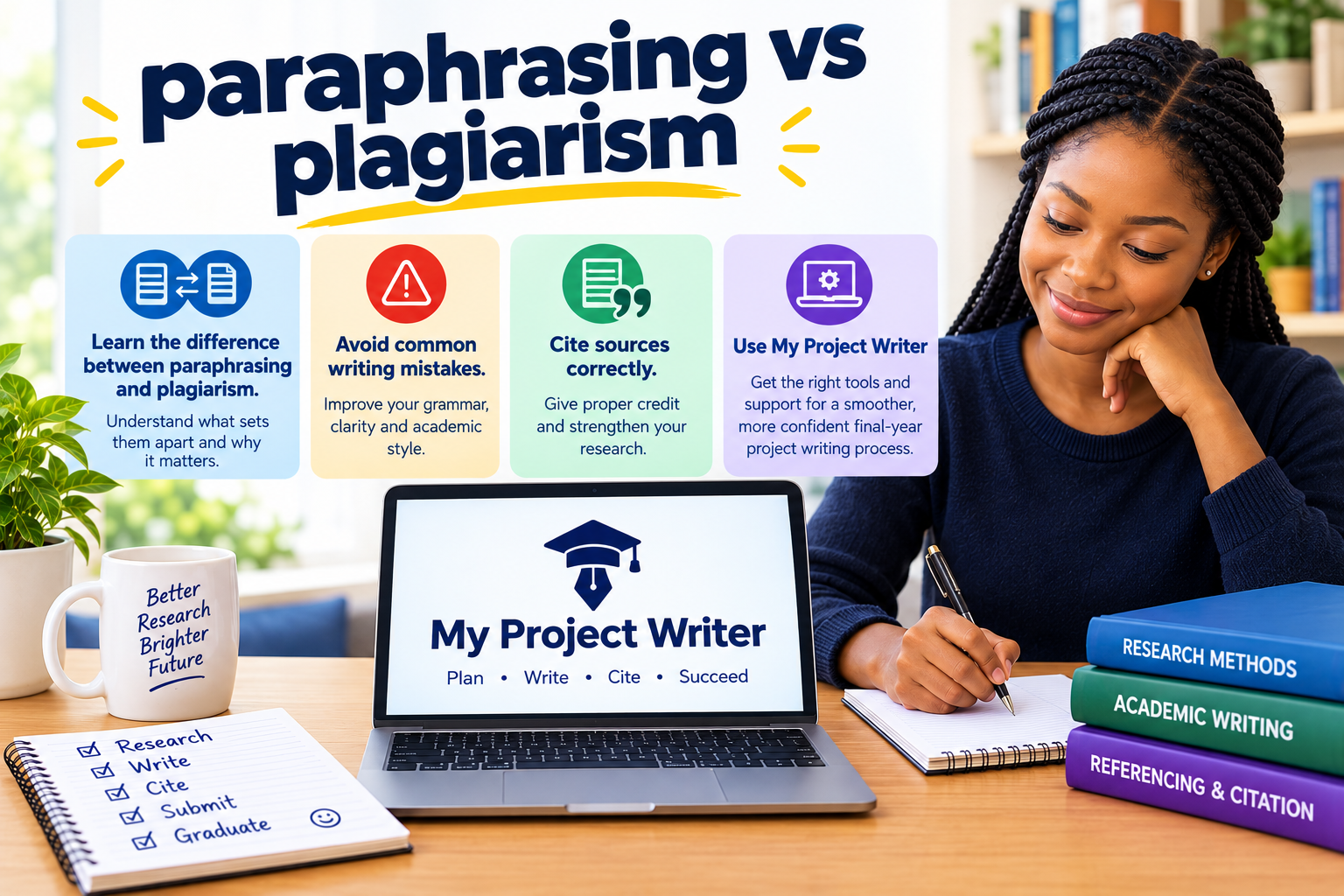
Paraphrasing vs Plagiarism: What Every Final Year Student Needs to Know When Writing a Project
Learn the difference between paraphrasing and plagiarism, avoid common writing mistakes, cite sources correctly using My Project Writer to support your final-year project writing process with greater confidence.
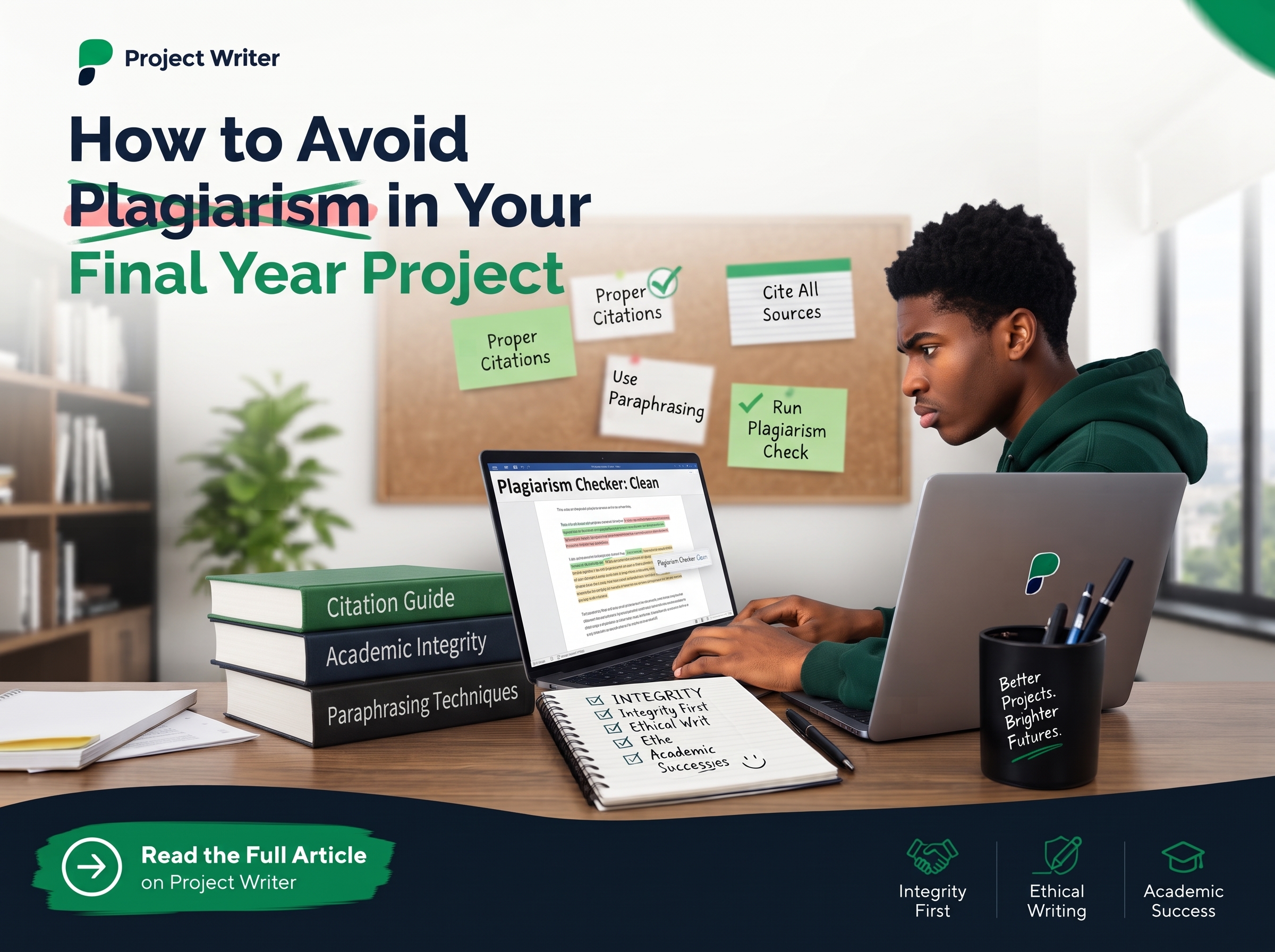
How to Avoid Plagiarism in Your Final Year Project
What actually counts as plagiarism beyond copy-paste, why it happens to careful students, and practical habits to keep your final year project original.
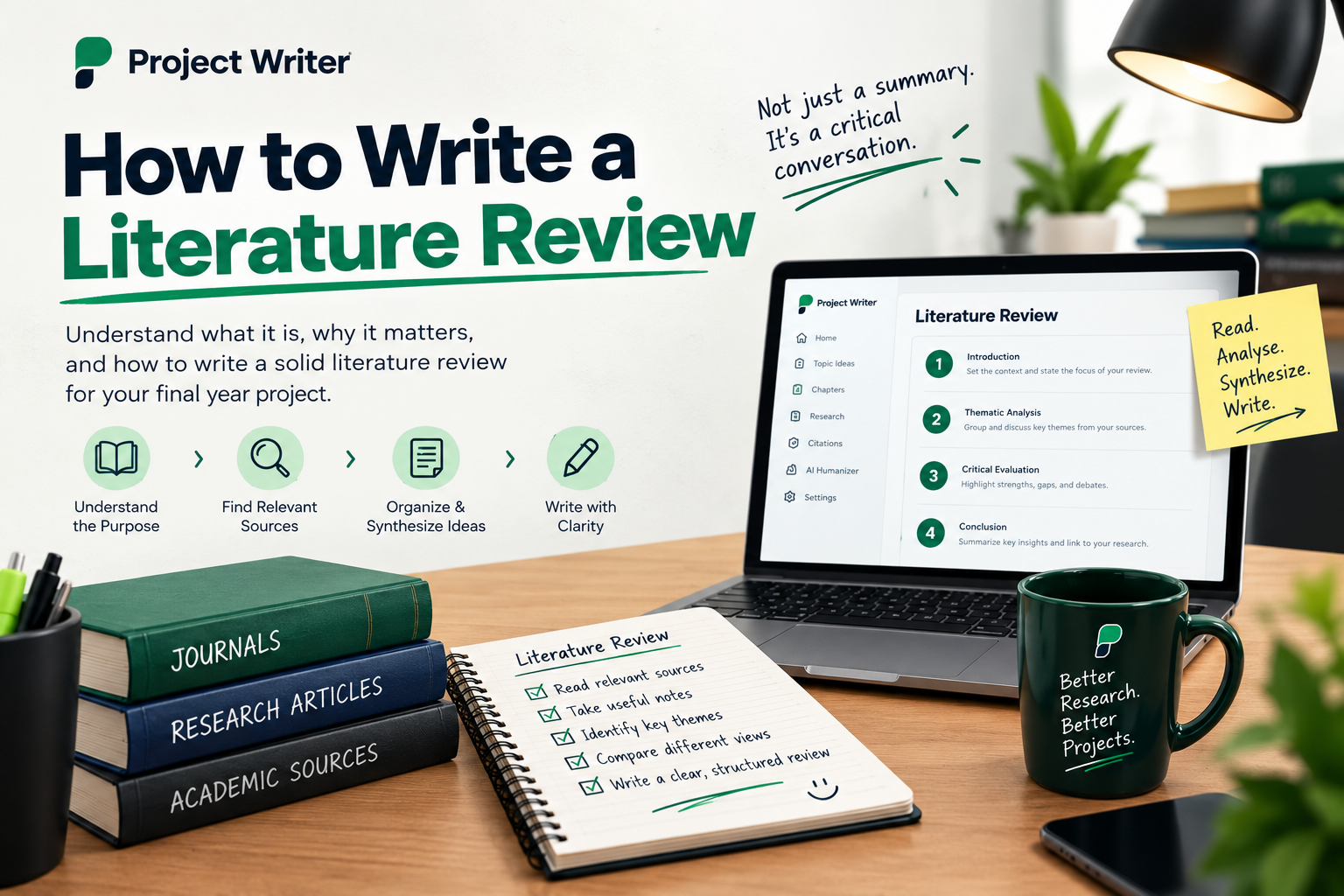
How to Write a Literature Review
A practical way to structure your final year project literature review by theme, avoid the most common mistakes, and actually land on your research gap.
How to Write Your Chapter 1 of Your Final Year Project
A practical guide to writing Chapter 1 of your final year project, the standard sub-sections, common mistakes, and why writing it last often works better.